Three Ways to Improve Your Running
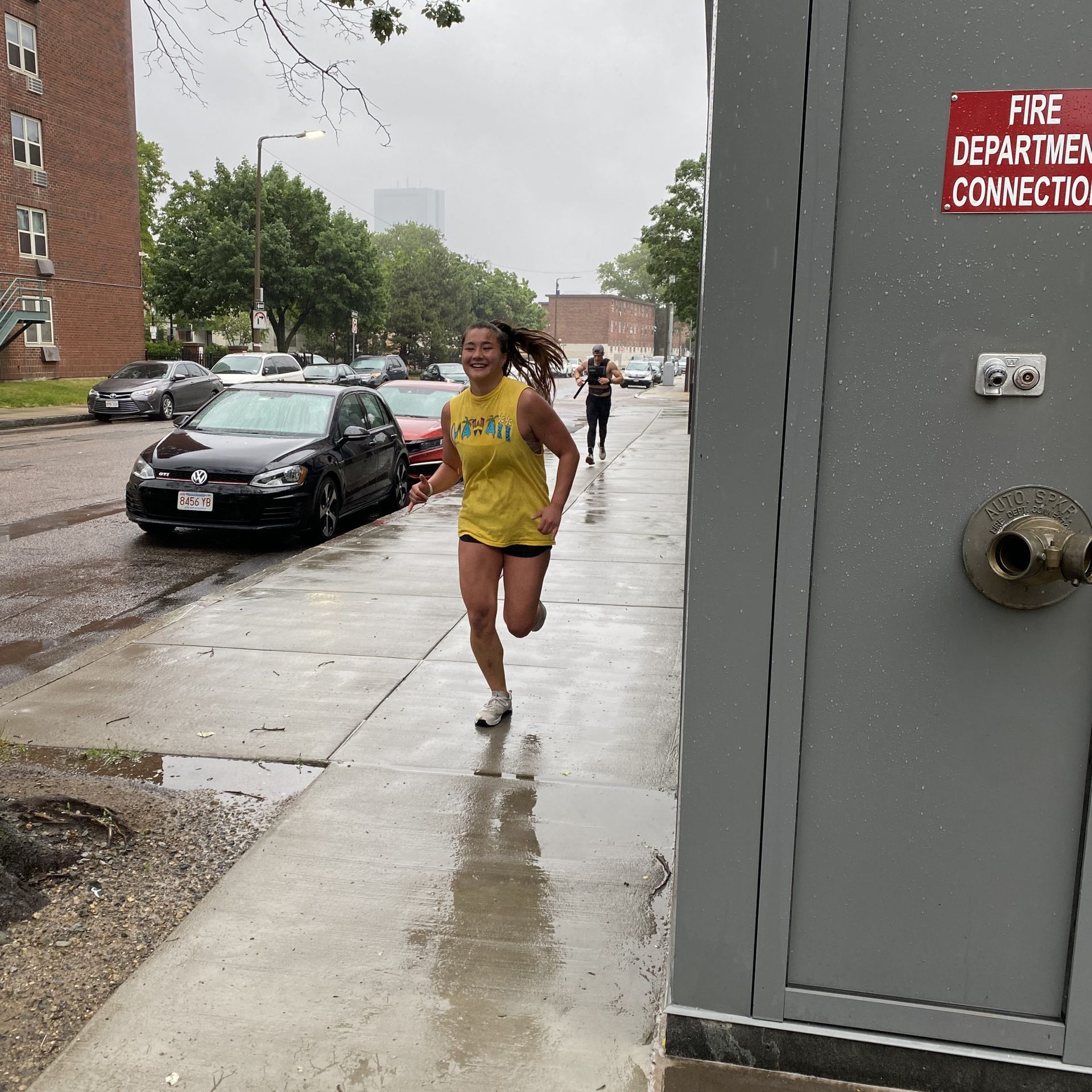

Figure 4 for pose running
Running is an essential facet of functional fitness; it is one of our more important movements as humans. Back in the day, running was how we got from place to place, got away from danger, and hunted for food. While we no longer need to do those things, our body’s ability to move around means that running is still important to our health and is even an opportunity to challenge ourselves. I personally challenged myself to run and train for a half marathon that I finished on June 4th, 2022, to improve this facet of my fitness.
While training for my half marathon, I learned that three specific aspects of running have not only helped me run better but have also translated into my functional fitness. These three facets are the pose method, running cadence, and breathing rhythm.
1. THE POSE METHOD
Before joining the Marine Corps, I had no long-distance running experience. I played football and baseball, but I never ran more than a mile at a time, and even that was rare. (This marathon is the longest run I will have done at one time.) Once I joined the Marine Corps, I quickly realized their philosophy was to just run, then run some more, yell at us, and then run some more. If there was one thing that I wish they taught us about running, it would be the Pose Method.
WHAT IS THE POSE METHOD?
Pose Method is the idea of hitting certain positions during different phases of your step. Stage one of the pose method is the pull, where you are pulling your feet up into the pose position. This is required in order to maintain an uninterrupted free fall. Stage two of the pose method is the running pose, this is the key body pose. Your lower body makes the shape of a figure four, is the single instance of balance, and helps to improve potential energy and resilience. The third stage of the pose method is the fall. This is a free-falling body and is a fast and energy-efficient way to run. In running, this step is achieved through the use of gravity to pull us forward.

The Pose Method is used in distances varying between 800m to 5Km, running at an average pace. Once we start sprinting or running longer (or slower) distances, then our stride shape might change. The Pose Method helps us do a few things. Pulling the heel up even with our knee helps us activate and use our glutes more while running, which ultimately helps us to avoid a quad pump from longer runs. Keeping our foot under our midline helps us avoid heel striking. When we heel strike, it acts as a brake and places more strain on our knees, hips, and lower back instead of using our calves. When we use our calves, it helps dissipate some of that energy. Using this method allows us to conserve energy and run more efficiently. Holding these shapes also helps us keep our cadence and breathing rhythm steady and repeatable.

2. RUNNING CADENCE
Once I realized how important my running technique was, the next step for me was to correct my stride length and tempo.
What is Running Cadence?
Our running cadence is the number of steps we take per minute (SPM), similar to cadence or RPM on the Assault Bike, or the stroke rate (SR) on the rower. Running cadence is measured as the number of times a foot strikes the ground per minute. There are one or two factors that change as speed increases or decreases, the other is stride length. We all naturally fall into a combination of the two. Typically, our cadence is too slow to hold an energy-efficient cadence. When running we want to stay within 160-180 SPM. Once we fall below 160, we start to create inefficiencies in our running, such as heel striking or underutilizing or overutilizing our hamstrings and quads.
Most accomplished distance runners hold above a 180 SPM. Keeping the SPM range helps us lessen our ground contact time (which means both our feet are in the air for a longer period of time relative to having a lower SPM) without overstriding. I have found this helps not only my running training but also my functional fitness training. It allows me to keep my speed without having to consume more energy while running before I perform other movements such as cleans, squats, pull-ups, or other movements. If you ever wanted to test what it feels like to run at this cadence just download a metronome on your phone and set it to 180 BPM. Make each foot strike batch a tick of the metronome. For most of us, this will feel fast and potentially awkward, but practicing this over time will make us more efficient and even safer runners!

3. BREATHING RHYTHM
Almost every movement in functional fitness uses its own unique breathing rhythm. Part of improving our ability to perform this type of training at speed is to learn these individual rhythms so we can stay relaxed and use the right amount of energy with each movement and rep scheme. Once a baseline is set, we can use that to help us further develop our breathing rhythm.
What is Breathing Rhythm?
Breathing rhythm is the tempo and timing of our breath with our foot strikes. We measure our breathing rhythm as breaths per step. The good news is this does not need to be over-complicated because there is a low amount of overall tension throughout our body while moving. Think about timing each exhale and inhale with a foot strike. Running is cyclical so we want both a cadence and breathing rhythm to reflect that. In fact, our breathing rhythm could change based on how fast we are running, the amount of fatigue we have when we start running, or the duration of our efforts. Our breathing rhythm or ratio can vary pretty drastically based on those factors. Ranging from 12:1 to 2:1 for a single breath, meaning we take 12 or 2 strikes per full breath – one full breath is in and out. Keep in mind these are extremes. We want to be around an average of 6:1 or 4:1 with a moderate pace.
Our breathing rhythm helps us stay relaxed and keep the movement sustainable for us aerobically. I have learned that I like to have my exhale longer than my inhale, this helps me stay calm and keep my nervous system relaxed. For example, I breathe in for 3 strikes then out for 4 strikes. If I am tired, I will change it to breathing in for 2 strikes and out for 3 strikes. To get this down you have to practice. To practice, focus on your breath and only that while you run.
Running is one of the most basic and functional movements we have outside of walking. Almost all of us can improve our running by focusing on these three aspects; pose method, running cadence (SPM), and our breathing rhythm. This type of focus and improvement will carry over to your running, and your functional fitness training. Allowing you to become a more efficient energy user and carry over to any longer duration running workout such as a half marathon. Next time we run in class or when you’re out running on your own, try and focus on one of these aspects (don’t try to juggle all three at once). I am excited to see how these changes have helped me both improve my times in class workouts and in some competition-style workouts that I am looking forward to doing at some point this summer.
-Coach Derek
#BeBetter
The post Three Ways to Improve Your Running appeared first on R3VIVE FITNESS.