Why Do We Compete?

Derek Saffold • May 7, 2026

Why Do We Compete?

Here at R3vive, we don’t prioritize competition; we believe in movements that foster a healthier tomorrow and promote longevity. But competition does have its benefits; embracing the intensity, camaraderie, and fun can help build the intensity and results you're looking for. This doesn't mean it's required, but it can be beneficial for you as well when used in moderation. 


What is competition?


First, let’s talk about what competition is. Competing, in essence, is to strive to gain or win something by defeating or establishing superiority over an obstacle that is doing the same. Notice that I said an obstacle and not another person; this is important. While competition is typically between individuals or groups, it can also be against yourself, against a challenging goal, or against life's obstacles and adversities. I like to think of it as the act of overcoming adversity, no matter who or what the adversity is. 


Why do we compete?


Most of us are competing against something or for something most of the time. Whether you are competing for a new promotion, against another team in a sport, against your inner voices, at a CrossFit competition, a Hyrox race, or in class here at R3VIVE, competition can be a part of our daily lives without realizing it. The challenge and growth of competition can help us become better people, better athletes, or better professionals. The challenge helps us all grow and learn. It shows us what we struggle with, what some unexpected weaknesses and strengths are, and can show us some aspects of life we can improve on. My favorite part of competing outside of the pure challenge is the camaraderie. There is just something about challenging yourself with, or against others, that helps us all bond together. There is a feeling of accomplishment, camaraderie, and friendship when you're competing against and with one another, which brings everyone together. 


Competing is just a way to practice dealing with adversity.


While competition can be stressful and seen as just a test, it can also be a great tool to help your growth inside and outside of the gym, and has many benefits. As I have said above, we compete in life outside of the gym all the time. For most of us, that comes in some form of adversity. Any time we compete, we also get to practice facing that adversity and overcoming it. Competition brings about the ability to perform things we never thought were possible before. The
Social facilitation theory is the tendency for people who are being watched or observed to perform better than they would alone on simple tasks (or tasks they know how to do very well due to repetition). We understand this can also bring on extra stress, but we believe a supportive community like R3VIVE can make sure this is a positive experience, no matter the outcome. 


We typically can push ourselves to new limits that we didn't even know we had. We get the chance to not only let the community support us to new heights physically, but also mentally. The community helps us silence that little voice in our heads that tells us we can't. Last but not least, we get a chance to express and show what we have been working toward in the gym, and we get a chance to see just how far we have come!!


Why do you compete?


Each of us competes for different reasons, and none of them is less important than any other. I personally compete for two main reasons: to challenge myself both mentally and physically, and to see exactly where I am currently. I also do it because I love the community, and I love to see it as a whole express what everyone has been working towards. Seeing people surprise themselves and accomplish things they couldn't do or I can't do is truly inspiring. 


I can't wait to see y'all in R3vive to continue or start putting in the work so we can celebrate all the hard work that y'all have put in it together.
Book a Consultation
winners from throwdown 2025
By Derek Saffold April 8, 2026
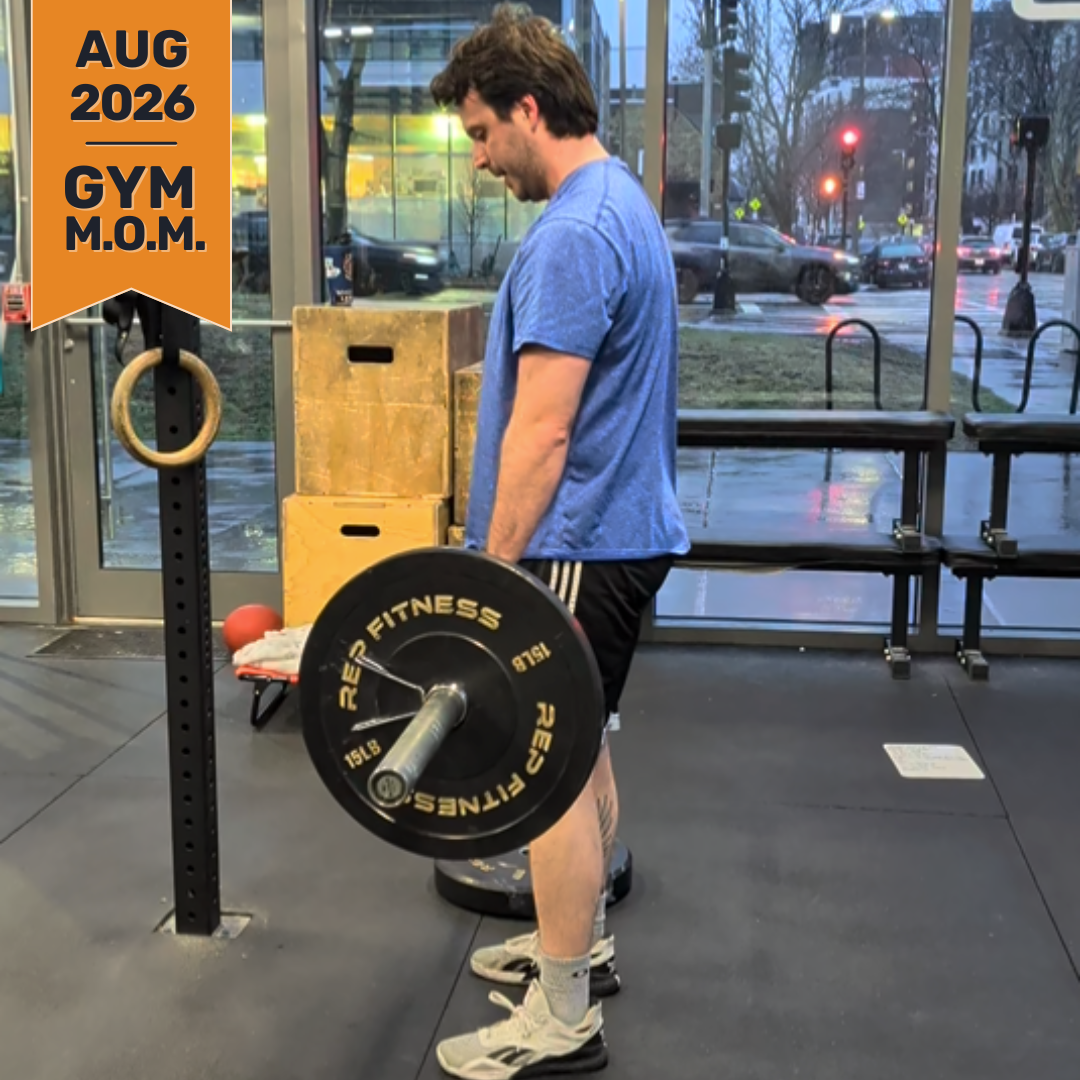
Meet the Member of the Month for April 2026: Jeremy Clark! What started as a little competitive motivation turned into a full-on commitment to getting stronger, moving better, and showing up consistently.
By Derek Saffold April 8, 2026
Let me give you a number: 1 in 8. GLP-1 medications—like Ozempic, Wegovy, and Mounjaro—are reshaping the conversation about weight loss. With 1 in 8 American adults reporting use as of 2025, chances are someone you know is experiencing their powerful effects. The truth is, the weight loss is significant , and we’re not here to talk you out of it. 25%. That's the percentage of American adults who, as of 2025, report having used a GLP-1 medication for weight loss. Chances are, someone in your life is on one of these right now. Maybe you are too. And honestly? The results are real. But we are here to talk about what the research says and ensure your weight loss journey doesn't cost you something invaluable: your muscle and strength. This is the key to lasting results, long-term health, and true functional fitness. The Study You Need to Know About A 2025 systematic review in Metabolism analyzed 22 clinical trials to understand exactly how GLP-1 medications affect your body composition. They found that the drugs work! On average, people lost 3.55 kg of total body weight. Here’s the part not getting enough attention: 0.86 kg—roughly 25% of everything lost—came from lean mass. That includes MUSCLE! This lean tissue is vital. It keeps your metabolism running, supports your joints, and is strongly correlated with longevity and independence. The more powerful the drug, the worse the muscle loss. In one clinical trial for the potent GLP-1, Semaglutide, nearly 45% of total weight lost came from lean mass. Losing muscle at this rate is a serious concern for anyone aiming for better health, not just a lower number on the scale. Why This Muscle Loss Happens GLP-1 medications work by suppressing your appetite — they make you feel full faster and eat significantly less. That creates a large caloric deficit, which is great for fat loss. However, when calories drop quickly, your body often cuts costs in the easiest place: muscle. Think of it like a company facing sudden budget cuts. When revenue drops fast, leadership doesn't carefully evaluate every line item — they cut headcount because it's the fastest way to reduce costs. Your body does the same thing with muscle. Muscle is metabolically expensive to maintain. Without a strong signal telling your body to keep that tissue, it can be burned for fuel. This means you could be losing the very strength and functional capacity you'll need most when the weight loss is complete, and you’re no longer on the medication. The Solution: Protecting Your Strength with Resistance Training The good news is that we have the key to sending your body that preservation signal. Resistance training lets our bodies know that “this tissue is being used” - so do what we can to keep it. Without that, even a clinically proven weight loss drug can end up costing you the very tissue you'll need most when the weight is gone, and you're no longer taking the GLP-1 medication. What This Means for You If you are on a GLP-1 medication—or considering one—your focus needs to shift from just the scale to protecting your muscle. The drug can handle the appetite piece. Your job — and ours — is to protect your muscle while that's happening. Consistent Resistance Training (The Signal). Resistance training is non-negotiable. It tells your body, “This tissue is being used—keep it!” Consistent, challenging training is the most powerful tool you have to mitigate the muscle-wasting effects of a fast caloric deficit. Prioritize Protein (The Fuel). Appetite suppression on GLP-1s makes it extremely easy to under-eat, especially protein. Your body needs protein to rebuild and maintain muscle tissue. We recommend setting and hitting high protein targets every single day, even when you don't feel hungry. That's why our training is the Ideal Program for GLP-1 Users If your goal is to lose fat , we should also be preserving (maybe building some) muscle, strength, and fitness. A comprehensive program like our Pump or Functional Fitness classes is a perfect complement to your GLP-1 journey. Resistance Training : Functional Fitness, and Pump incorporates heavy lifting (squats, deadlifts, presses) that provides the powerful signal needed to preserve muscle mass. Builds Real-World Fitness : The program is designed around movements that translate into real-world strength and capacity—lifting kids, carrying groceries, moving well for a lifetime. Scalable : Whether you’re a beginner or a seasoned athlete, our certified Coaches can scale the intensity to ensure you're challenged enough to protect muscle without over-training. The scale going down is only part of the story. We want you to lose fat, not the muscle your body needs to stay strong and functional for the long haul. We have the tools and the plan to help you ensure your weight loss results look as good on the inside as they do on the scale, and most importantly, that they stay that way! Questions about how this applies to your situation specifically? Just send us an email or set up a consultation below!
By Derek Saffold March 16, 2026
What is the March of Dimes? The March of Dimes is a non-profit organization dedicated to improving the health of mothers and babies, with a focus on preventing birth defects, premature birth, and infant mortality. Learn more about the March of Dimes here. Why is it important to us? We are excited to host a workout in support of the March of Dimes and the South Shore Hospital NICU team. My sister-in-law, Amanda Dougherty, and my nephew, Owen Dougherty, received a lot of care during Owen's premature and traumatic birth. Amanda and her family will be walking on the SSH NICU/SCN team in the March for Babies walk on May 9th, and we would love to support her by donating to the cause and helping other families in need. When's the charity class? We would love for everyone to come join us, no matter your fitness level, in support of this great cause. The class will be hosted on Sunday, April 12th, at 11 am. T-shirts will also be available for purchase as a preorder up until March 27th. All proceeds from registration of this event and profits from all shirts purchased will be donated to the SSH NICU/SCN team under Amanda Dougherty. Donate and Jump into Class If you would like to donate more, you can go directly to Amanda’s page and donate here.
More Posts